Find Middlesex County Residents
Middlesex County has no single county clerk, assessor, court, or voter database that lists every household. The first practical task is to identify the municipality for the address. That determines the local assessor, election office, city or town clerk, and many permit or archive routes. It also helps route land research to the right Registry of Deeds district. A postal city and ZIP can cross municipal lines, so they are useful search details but not a final jurisdiction answer.
Use a record as evidence for the narrow thing it records. A parcel record can identify the tax owner and the site address. A local voter list may confirm a registered voter where disclosure is allowed. A deed documents a recorded transfer. A directory or obituary can place someone in a past time period. Middlesex County research works best when two independent fields agree, such as a town plus a middle initial, or a deed book and page plus a parcel's last-sale entry.
- Identify the city or town for the Middlesex County address, then save the address exactly as written.
- Use the municipal assessor or the statewide parcel map to locate the site address, parcel, fiscal year, owner field, and last-sale clue.
- Search the correct Middlesex Registry district by owner name, book and page, town, or property mode.
- For a historical household, compare local directories, census material, newspapers, and the nearest library collection.
- Ask the actual custodian for an existing offline record when an official index does not reach the needed year.
Note: A non-match may reflect a different town, an older spelling, an offline index, or a protected record rather than proof that no record exists.
Middlesex County Resident Records Offices
Middlesex County's records are decentralized. Middlesex South and Middlesex North each keep land records for their assigned towns. Municipal assessors maintain tax parcels, while city and town election offices handle local voter records. Trial Court clerks and Probate and Family Court registers maintain case files. The State Archives, local libraries, and historical commissions hold much of the older material. The official town-to-registry locator is the safe starting point before opening a deed index.
Massachusetts Elections
Local offices keep requestable voter records.
Statewide records have separate limits.
Municipality-specific contact
The street-by-street path is covered in the Middlesex County street directory, where parcel, deed, and local-request steps are kept together.
Middlesex County Municipal Record Split
Fifty-four cities and towns sit within Middlesex County. Each can have its own clerk, assessor, registrar, building department, public-records officer, and local-history collection. Cambridge and Somerville have unusually detailed online and library resources, but their access methods do not automatically apply in Lowell, Groton, Framingham, or another town. Ask for the municipal record keeper when a statewide screen gives only a partial answer.
That split affects every search. A local clerk may hold marriage intentions, town reports, or cemetery material. The assessor can answer a current valuation or correction question. A city inspectional-services counter may hold permits and plans. Libraries can be the only usable path to microfilm, old street lists, obituary cards, or city directories. Start with a narrow request for an existing record, a date range, and the town instead of asking an office to create a new countywide list.
Middlesex County Parcel Search
The Massachusetts Interactive Property Map is a useful cross-town starting point. Enter an address or place, choose the type-ahead suggestion, then click the parcel itself. The map popup can show owner, site address, owner mailing address, assessed values, fiscal year, last sale, book and page, year built, units, use code, and zoning. The yellow finder marker is not the parcel selection, so open the parcel before recording any value.
Read the two address fields separately. The site or situs address tells where the parcel is located. The owner mailing address tells where the tax bill goes. They can match, but one does not prove the other. A trust, estate, company, or owner who lives elsewhere can appear in the owner field. The registry deed is the stronger source for legal ownership and boundary description, while the local assessor is often better for the freshest municipal tax data.
| MassGIS field or control | Use in a Middlesex search | Important limit |
|---|---|---|
| Address type-ahead | Routes to a likely location | Select a result, then click the actual parcel |
| Site address and parcel ZIP | Identifies the physical tax parcel | Postal geography is not municipal jurisdiction |
| Owner and mailing address | Gives a tax-record lead | Mailing address is not occupancy proof |
| Last sale, book and page | Bridges a parcel to a deed | Confirm in the proper Registry district |
| Fiscal year | Shows the assessment vintage | Municipal update timing differs |
- Parcel
- A tax-mapped piece of property, often carrying a local identifier.
- Situs address
- The street location of the parcel or structure.
- Owner mailing address
- The tax-bill destination, which may be elsewhere.
- Book and page
- A Registry citation that helps locate the recorded instrument.
Middlesex County Deed Records
Middlesex County land evidence begins at the registry, not with a generic address lookup. The South interface offers recorded-land Name, Document, Book, Property, Recorded Date, and Unindexed Property searches, plus separate registered-land modes. It states that searching, viewing, printing, and downloading were free when inspected. Use the town filter, especially for a common name, and allow browser popups when an image opens separately.
North's records reach to 1629, though its ordinary computer name index begins in 1966. Older books can require an unindexed search, microfilm, or office assistance. A useful historical detail is that imported North deed entries from 1976 through 1986 can display document type as “none,” so a year-limited search should not discard those entries. A deed documents a recorded transaction. It does not by itself prove who occupied a home.
For a former owner, take the last-sale book and page from the assessor record, read the current deed, save its grantor, grantee, legal description, plan or lot reference, and prior-instrument citation, then work backward. The legal description is especially important when an old deed predates a modern street number.
Note: North's older record path may move from the computer index to unindexed books or microfilm even when the underlying document survives.
Current Middlesex County Resident Directories
No current Middlesex County resident roll has one public search box. The useful sources are separate and should not be treated as interchangeable. A municipal parcel record describes the tax owner. A local voter list may provide permitted registration fields through the relevant election office. A recorded deed names document parties. A court docket confirms a case relationship or filing, and a business or license search can reveal a public affiliation without proving a residence.
| Current source | What it can support | Custodian | Access route |
|---|---|---|---|
| Municipal assessment record | Owner, site, mailing address, value, sale clue | City or town assessor | Local portal, MassGIS, or request |
| Local voter file | Releasable registration fields | Local election office | Defined municipal request |
| Recorded land index | Parties, dates, book/page, legal description | North or South Registry | Online index, image, or office route |
| MassCourts docket | Case party, date, type, court, status | Trial Court and clerk | Portal, clerk, or public terminal |
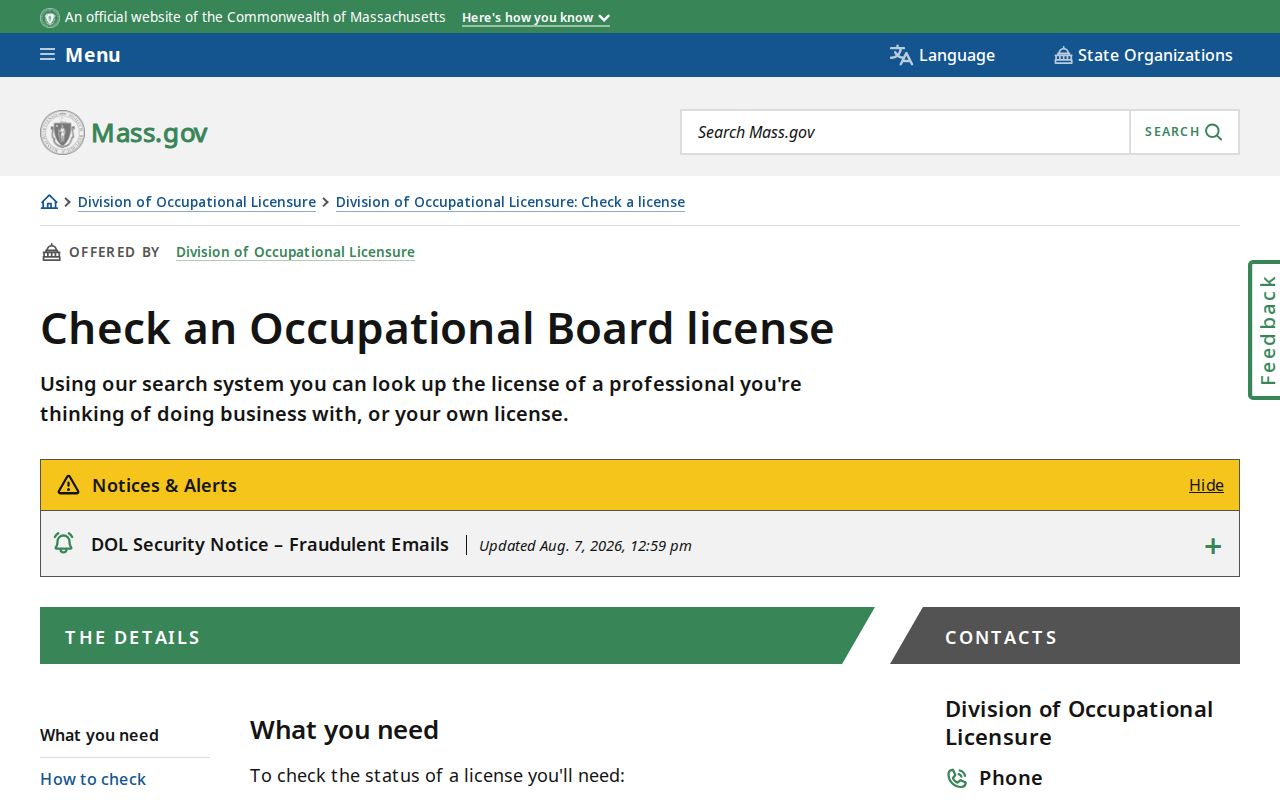
| Business or license record | Public entity or license affiliation | State division or board | Official search and custodian follow-up |
Use the Middlesex County resident lookup workflow when the question is about matching one named person across records rather than tracing an address.
Middlesex County Voter Records
Massachusetts' My Voter Registration Status form is for an individual voter, not a reverse Middlesex County directory. It asks for first and last name, birth month, day and year, five-digit residential ZIP, and an agreement checkbox. A new registration can take two or three weeks to appear. Use the registration name, including another name or nickname where the official search tips allow it.
Most local voter and election records are public and requestable from the city or town office, subject to confidentiality protections. The Secretary's guidance says a releasable local file can include name, address, party, date of birth, active or inactive status, and voter ID. The statewide central registry is not public under G.L. c. 51, § 47C. Protected and confidential registrations must be omitted, and a non-match is not proof that a person never lived in a municipality.
Note: Request a specific town, election or year, and record format instead of expecting the individual status form to produce a street roster.
Middlesex County Court Record Limits
MassCourts covers statewide Trial Court docket searching, including Middlesex venues. Its public screen uses Name, Case Type, Case Number, and Ticket or Citation tabs after a robot check. Civil name searching requires a surname of at least two characters, and case-type searches require a one-month maximum date range. A result can show a party or company, case number, case type, file date, initiating action, party type, status, court, and affiliation.
Use a docket as an index, not a current-address confirmation. The same name can appear in more than one case, and a listed party may be a business, estate, or representative. Juvenile, sealed, expunged, impounded, adoption, and certain family material have access limits. The relevant Clerk, Register, or Recorder can explain whether a file is on site, archived, or available for an ordinary or certified copy. Courthouse public terminals can expose more docket information than remote access.
Middlesex County Vital Record Routes
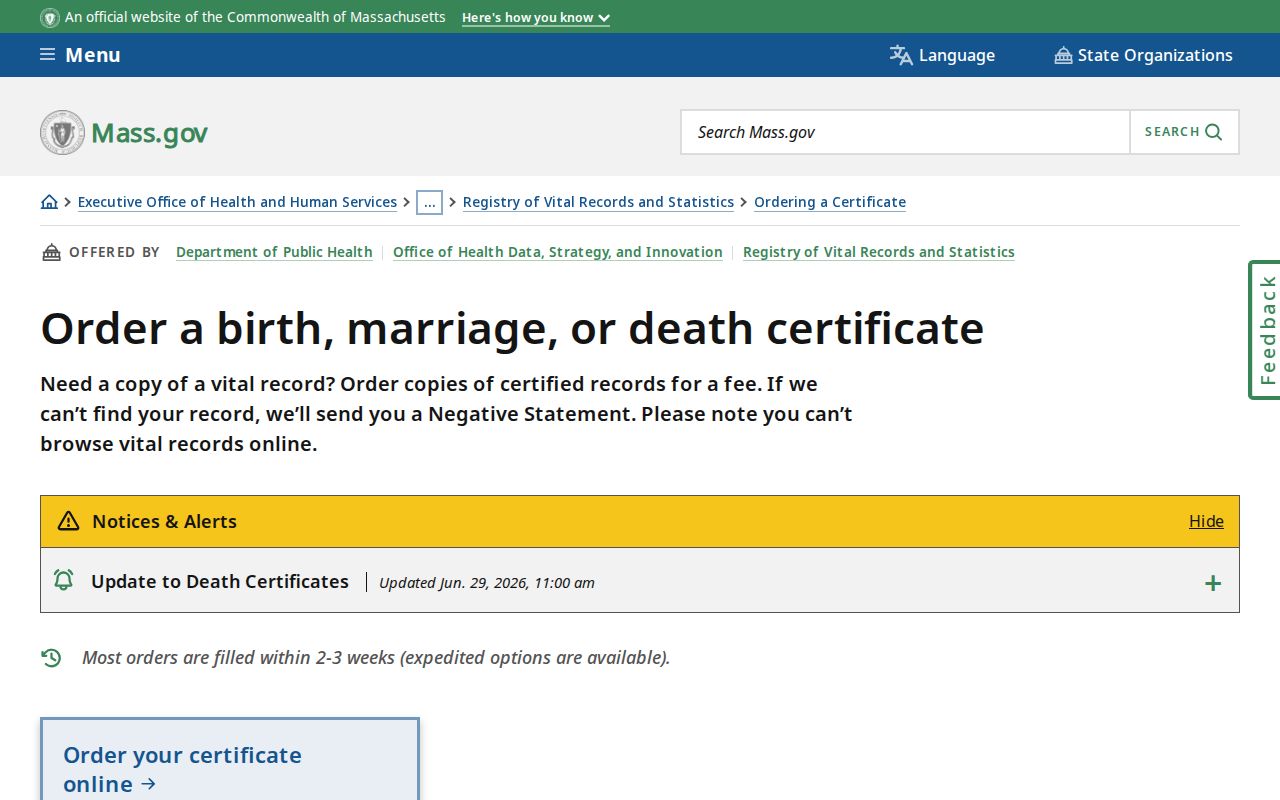
Vital-record research is divided by both date and municipality. The State Archives provides an index for 1841 through 1910 and holds state records from 1841 through 1935. The Registry of Vital Records and Statistics handles 1936 to the present, while city and town clerks can hold eligible local records. Modern records are not a public online browse tool. A request needs the event information and can require identification or proof of relationship.
The state's certificate-ordering guidance lists online, phone, mail, and in-person channels. It also states that 1931 through 1935 records have recently moved to the Archives. Historic results generally supply a volume and page citation, which is a lead for a copy request rather than a complete online record. Restricted categories, adoption-related material, and death Social Security information have their own rules.
The State Archives vital index is the appropriate historical search surface for a name, year range, record type, and town.
Use the official certificate ordering page to compare the request routes before sending identification or payment.
Historical Middlesex County Resident Directories
Historical research has a deeper paper and microfilm trail. The State Library lists Middlesex County directories for 1871-72, 1873, 1875, 1879-80, 1884-85, and 1890, along with uneven town-specific runs. Cambridge directories gain a street-address cross-index after 1905. Somerville directories are arranged by name from 1851 through 1933 and by ward, precinct, and address from 1939 forward. Winchester preserves resident lists from 1901 through 2019 and directories from 1950 through 2012.
A directory entry can include a surname, given name or initial, occupation, employer, home and work address, and publisher abbreviations. Read the volume's key before interpreting a widow, renter, or house-guide mark. The Middlesex County city directories collection page keeps the full year runs, reading conventions, and library access details together.
Middlesex County's record history is layered. The county was incorporated in 1643, early court books survive for 1649 through 1699, and the North Registry reports land records back to 1629. Later municipal directories, local libraries, archives, and digitized indexes each preserve a different layer. An image, an index, and a physical volume can all be needed for the same family trail.
Middlesex County Public Records Requests
When an index ends, send a focused written request to the office that holds the existing record. Massachusetts Public Records Law, G.L. c. 66, § 10, is implemented through 950 CMR 32.00. A request can state the custodian, record type, municipality, date range, desired fields, preferred electronic format, and contact details. The law generally calls for a response within 10 business days, which may be a record, a fee estimate, a schedule, or a denial that cites an exemption.
The state says an agency need not create a new list or answer a research question. Municipal fees can apply after more than two hours of employee time, while state-agency fees can apply after more than four hours, subject to the published rules. A denial or nonresponse can generally be appealed to the Supervisor of Records within 90 days. The state request guidance explains how to narrow a request before sending it.
Middlesex County Protected Addresses
Missing data can be intentional. Massachusetts protects Address Confidentiality Program participants through a substitute-address and mail-forwarding system. Confidential voter registration, court impoundment, sealed cases, restricted vital information, and motor-vehicle privacy rules also limit what public results show. Do not try to reconstruct a protected address from a parcel card, a court docket, or an old directory.
Property research also needs a freshness check. MassGIS receives municipal submissions and its parcel popups display fiscal-year information, but the local assessor can have newer corrections or valuation data. Official records support family history, heir research, civic questions, and personal record correction. They must never be used to watch, intimidate, harass, or harm a person.
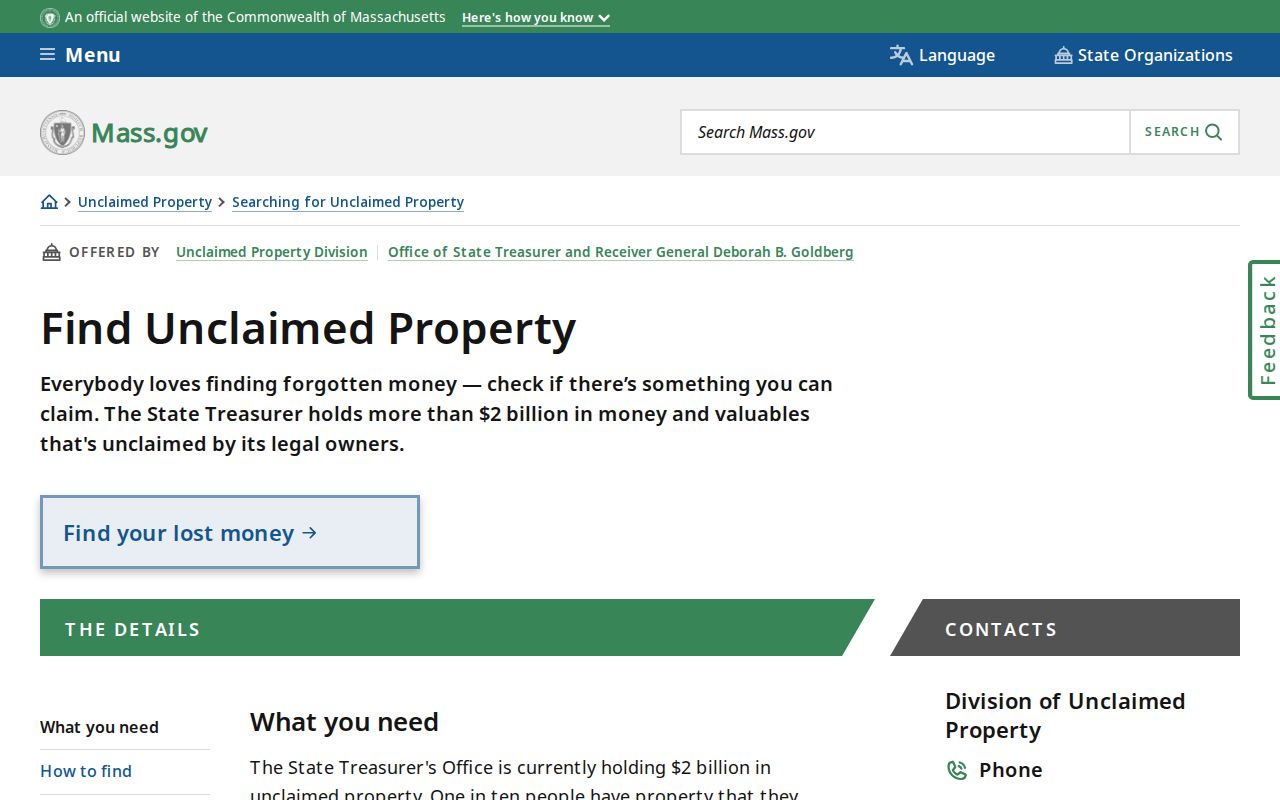
The Massachusetts Treasury search is free and can help a former resident or heir start an abandoned-property claim.
The Massachusetts license-search instructions explain the official professional-license route for a public affiliation check.