
Middlesex County City Directory Holdings
Middlesex County has no single municipal directory shelf. The useful record is held by the town or city that printed it, while the State Library supplies a statewide catalog of city and town volumes. Start by naming the municipality, then compare its holdings against a county run. The documented material ranges from county books to address-oriented local volumes. A directory can support an address or household question, but it is not a voter list and should not be treated as proof of legal residence for every person in a building.
| Collection | Years | Where Held | Access |
|---|---|---|---|
| Middlesex County directories | 1871-72, 1873, 1875, 1879-80, 1884-85, 1890 | Massachusetts State Library | Catalog and reading-room route |
| Somerville directories | 1851-1933 by name; 1939-present by ward, precinct, and address | Somerville Public Library local history | Paper, microfilm, and selected online volumes |
| Cambridge directories | Street cross-index after 1905; selected digital volumes | Cambridge Room and Historical Commission | Reading-room and collection access |
| Winchester directories and resident lists | Directories 1950-2012; resident lists 1901-2019 | Winchester Public Library local history | Local collection and research guide |
Annual coverage is not guaranteed. The State Library's list identifies selected local years, and each library catalog can add or qualify what is available. Use the exact volume year, town, and page or image number in research notes. That small record keeps a family-history finding tied to a source instead of to a memory.
Middlesex County City Directory Years
The Massachusetts State Library's genealogical resources describe a city and town directory collection that begins with Boston in 1789 and reaches the last Boston directory in 1981. Its downloadable holdings list is the safest source for a local run. The Middlesex County titles for 1871-72, 1873, 1875, 1879-80, 1884-85, and 1890 are specific documented editions, not a claim of uninterrupted publication.
There are other useful gaps to fill. Ayer, Groton, Harvard, and Littleton appear in National Archives circa-1930 directory material, and the same federal collection names Cambridge, Arlington, and Belmont examples. The National Archives directory finding page is a way to check those locations before planning a visit or requesting a scan. Town reports, valuation lists, and separate voting lists may complement a directory, but they answer different questions.
Note: A gap in the catalog means only that the inspected list does not document that volume, not that no local copy survives.
Cambridge Middlesex County Directory Index
Cambridge provides one of the clearest address bridges in Middlesex County. The Historical Commission says its directories are arranged by name and have a street-address cross-index after 1905. That cross-index lets a researcher begin with a building, then check the name-oriented side of the same directory. The Commission's family-history material also says entries can include occupation, home and work addresses, and other household members.
The Cambridge Historical Commission research archive adds city directories, atlases, maps, photographs, plans, and some deed, tax, and building-permit material to a building inventory of approximately 13,000 properties. Those companion sources help distinguish a move from a changed street number or a changed building.
Cambridge Historical Commission research aids describe the directory and property-research holdings used for this Middlesex County city directory work.
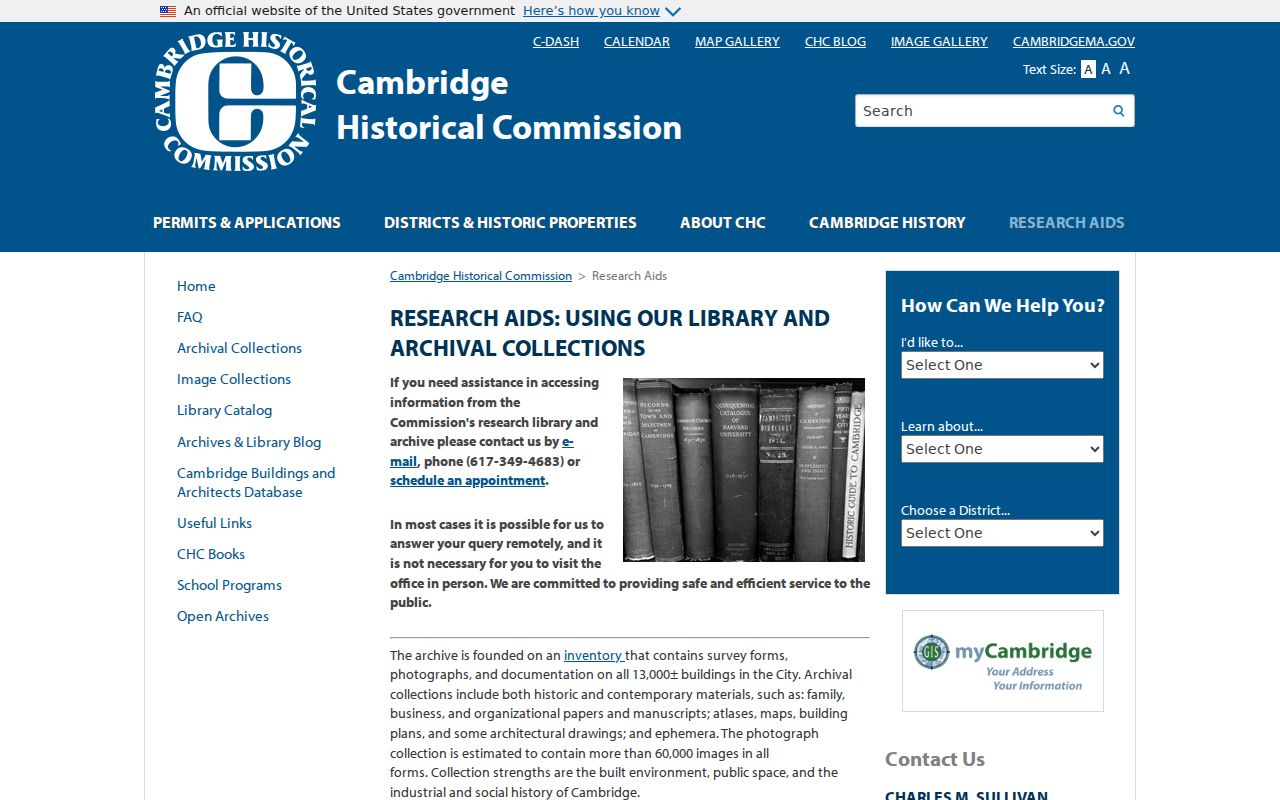
The commission's collection combines a name-and-address trail with material about the structure, which is useful when an old directory entry needs local context.
Somerville Middlesex County Directory Shift
Somerville has a valuable format change that can change the search method. Its documented volumes run from 1851 forward. The 1851-1933 volumes are organized by name, while volumes from 1939 forward are organized by ward, precinct, and address. A surname search that works well in an early book may therefore fail in a later one unless the researcher switches to the address arrangement.
The Somerville Public Library genealogy collection also identifies poll-tax listings from 1847-1938, Middlesex federal census microfilm for 1800-1930, Boston telephone directories for 1910-1983, the Somerville Journal, and an obituary index. These are useful corroborating sources when a household appears in one year but not the next.
Note: The 1939 organization change is a filing change, not evidence that a household moved or that its members changed.
Reading Middlesex County Directory Entries
Read the preface or abbreviation key before extracting a name. Directory entries are commonly surname first and can include a given name or initial, an occupation or business, a home street and number, and position or household notes. Cambridge's guide confirms that home and business addresses and other household members may appear. Other marks, including a spouse in parentheses or a widow notation, must be checked against the individual volume rather than assumed.
| Name | Surname-first entry with a given name or initial, useful for noting spelling variants. |
|---|---|
| Occupation or business | An occupation or business clue that can separate people with the same name. |
| Address fields | An entry may identify a home, business address, or both, depending on the volume. |
| Household notation | Some editions use spouse or widow wording, but the book's own key controls the meaning. |
| Page evidence | Record the page or image number, volume title, publisher, edition year, and town. |
- Criss-cross directory
- An address-ordered section that can reverse the usual name-to-address search, where a local volume provides one.
- House guide
- A street or address arrangement inside some directories, distinct from the alphabetical resident entries.
- Abbreviation key
- The publisher's explanation of marks such as street directions and household shorthand, usually found in introductory matter.
Middlesex County Directory Room Rules
The Cambridge Room at the Main Library holds more than 200 collections and nearly 2,700 books from the 17th through 21st centuries, including directories, historic newspapers, yearbooks, house research, family research, photographs, and archives. Its materials do not circulate, and the library asks visitors to call or email ahead. At the time inspected, its posted hours were Monday evening and limited Tuesday through Thursday daytime periods, with Friday through Sunday closed.
Elsewhere, access is equally local. Somerville offers a local-history help channel for out-of-town genealogy questions and reports a usual one-to-two-business-day response. Arlington's room uses a key-exchange arrangement and pencils. Chelmsford's local-history room is appointment-based, while Lowell Historical Society research material requires advance coordination. Those rules matter because the desired directory may be on a shelf, microfilm, a licensed database, or available only through staff.
The Cambridge Room collection page shows the library setting behind a Middlesex County city directory search.
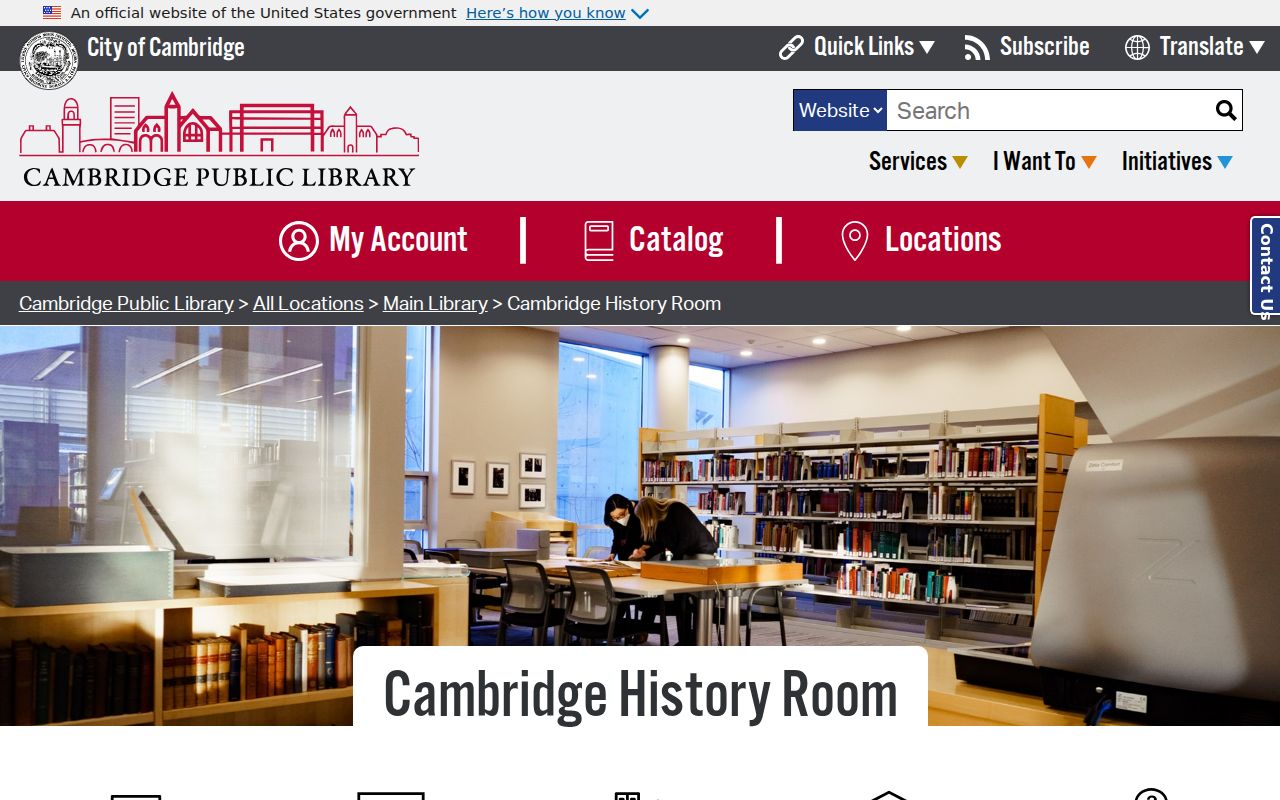
Calling ahead is especially useful for non-circulating materials, since the route to a directory can depend on staff, collection storage, and the town involved.
Trace Middlesex County City Directories
A directory is strongest when it becomes a sequence. Begin with a known name and an approximate year. Write down each spelling and initial, then compare the person, address, occupation, business, and household wording over nearby editions. If the person changes address, the old and new entries should be treated as a possible connection that needs confirmation from the town, street, family detail, or another record.
- Find the surname in the alphabetical portion and record the complete entry with its page or image number.
- Check a house guide, address section, or Cambridge cross-index when the volume offers one.
- Follow the same address through nearby years and note any change in occupation, household wording, or street number.
- Pair the directory year with the nearest public federal census, which supplies a decennial household snapshot rather than an annual local listing.
- Use a local obituary index, newspaper, or probate record when a disappearance may reflect death or an estate transfer.
Federal individual schedules are generally released under a 72-year rule, and 1950 was the latest fully released decennial schedule at the research date. A directory can narrow the interval between census years. It cannot establish that every listed name stayed at that address throughout the year. For a modern record confirmation, use the official trail described in the Middlesex County resident lookup resource rather than extending an old entry into the present.
Middlesex County Directories and Maps
Address evidence gains value when it is paired with a map or building source. The Somerville house-history collection identifies 1852, 1874, 1884, and 1895 atlases, zoning and ward maps from 1925 forward, and Sanborn material for 1900, 1933/34, and 1934-1950. Cambridge Historical Commission material includes atlases, maps, plans, and building research. A map can clarify a lot, a street name, or a structure footprint that appears beside a directory address.
Use each source for its own purpose. A directory can place a named person or business at an address. An atlas may show owner names or lot outlines. A Sanborn sheet can describe a structure's footprint, materials, and use. None of those sources alone proves who occupied every unit. Keeping the source types separate makes a local history conclusion easier to revisit.
Note: Old street numbers and renamed streets should be checked against local maps and deed descriptions before matching entries across decades.
Middlesex County Directory Timeline
Directory access in Middlesex County developed unevenly because each municipality preserved its own material. The dates below are documented collection markers, not a complete publication history for every town.
- 1789: the State Library's city and town directory collection begins with the first Boston directory.
- 1871-1890: the identified Middlesex County editions appear in selected runs, including 1871-72 and 1890.
- After 1905: Cambridge's directory material has a street-address cross-index.
- 1939 onward: Somerville's documented arrangement changes to ward, precinct, and address.
- 1901-2019 and 1950-2012: Winchester's resident lists and directory runs offer a long later-period local trail.
The timeline explains why a countywide search can feel uneven. A researcher may move from a State Library catalog to a municipal room, then to microfilm or a staff-assisted collection. That is normal for Middlesex County historical evidence, where custody follows the town and the record type.